Sourdough Vocabulary: A Complete Guide to Sourdough Terms
Confused by sourdough terms? This beginner sourdough glossary explains everything you need to know to master sourdough starter: discard, hydration, bulk fermentation, proofing, scoring, and more!

A Quick Look at this Guide
- ✅ Post Title: Sourdough Terms Explained for Beginners (Sourdough Glossary)
- 🕒 Read Time: ~6–10 minutes
- 👪 Best For: Beginner sourdough bakers (or anyone confused by sourdough instructions)
- 🍽 Includes: Starter vocabulary + dough mixing + fermentation + shaping/tools + baking terms + troubleshooting
- 🥣 Key Terms Covered: Discard, active starter, feeding, levain, hydration, autolyse, bulk fermentation, proofing, stretch & folds, scoring, oven spring, open bake, crumb types, and more
- 📖 Format: Organized glossary sections + quick definitions + beginner-friendly explanations + recipe links for practice
- ⭐ Why You’ll Love It: This post makes sourdough feel way less intimidating by translating the “sourdough language” into simple, plain-English definitions you can actually understand. It’s an easy reference you can bookmark and come back to anytime a recipe uses a term you don’t recognize.
SUMMARIZE & SAVE THIS CONTENT ON
Why You’ll Love This Guide
- Save as a Reference: Bookmark this post and come back to it as you get more hands-on experience.
- Learn as You Go: You don’t need to know all of these terms right away. Just cover the basics and then dive in and make your first sourdough recipe!
- Written by a Real Sourdough Home Baker: I’ve had my starter for close to 10 years and have been baking delicious breads and recipes with it all the while. AI is super helpful, but sourdough is an art. It’s nice to learn from a real person who has lots of experience!
Sourdough Terms Explained for Beginners
When you’re new to sourdough, it can feel like everyone’s speaking a different language. Autolyse… bulk fermentation… levain… hydration… and suddenly you’re quitting before you even get started because you don’t speak sourdough.
The best way to learn is to jump in. Once you get your sourdough starter going, I recommend making sourdough pancakes first, then beginner’s sourdough artisan bread!



Bookmark this post and come back anytime a recipe calls for a term you don’t recognize!
Sourdough Basics
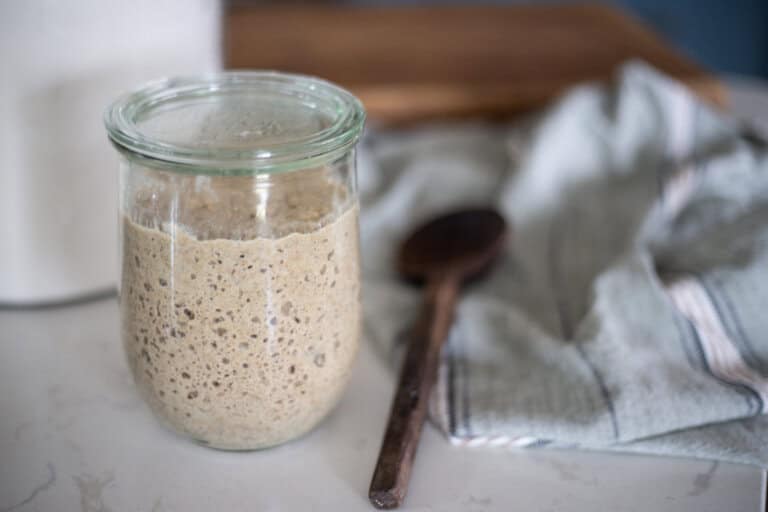
- Sourdough Starter: A sourdough starter is a mixture of flour and water that naturally captures wild yeast and beneficial bacteria. This living culture is what makes sourdough rise without commercial yeast.
- Active Starter: An “active” starter is bubbly, risen, and ready to bake with. It takes a couple of weeks to establish an active starter, but once it’s established, most starters are active 4–12 hours after feeding and fermenting at room temperature.
- Feeding a Starter – Feeding means adding fresh flour and water to your starter to keep it healthy and strong. This must be done 1-2 times a day if you store it on the countertop at room temperature. If you store it in the fridge, you will only need to feed it when you want to bake with it.
- Discard – Discard is inactive sourdough starter, meaning it has been fed, risen, and then fallen flat again. When you’re establishing a brand new starter, you will throw away most of the “discard” every day before feeding. Once your starter is established, you can use inactive starter or discard in “discard” recipes.
- Discard Recipes – Recipes designed to use sourdough discard. These are often quicker than bread because they don’t rely on long fermentation for rising but use some kind of added leavener like commercial yeast or baking powder.
- Levain – Levain is a small, separate build of starter made specifically for baking a particular recipe (like a “starter on purpose”). Many recipes use levain because it helps with timing and consistency. For example, if a recipe calls for 90 grams of active starter, you can make a “levain” that is exactly 90 grams by using a 1:1:1 ratio and combining 30 grams starter + 30 grams water + 30 grams flour, then letting it rise until it’s active.
- Mother Starter – Your main jar of starter that you keep and feed regularly. Most home bakers only keep one jar of starter rather than keeping a “mother” and making separate levains for baking. It’s really up to you on how precise you want to be, as using a levain gives you more precision.
- Hydration (Starter Hydration) – Hydration refers to the ratio of water to flour. A 100% hydration starter means equal parts water and flour by weight (ex: 50g flour + 50g water). You’ll see this expressed as a 100% starter or a 1:1 starter.
This post may contain affiliate links. I only recommend products I use and love. If you purchase through my links, I may earn a small commission at no extra cost to you.
Understanding Sourdough Starter Hydration
- Sourdough starter hydration is calculated by dividing the weight of water by the weight of flour and multiplying by 100 (hydration % = water ÷ flour × 100).
- A lower hydration (stiffer) starter might be 60% hydration, such as 50g flour + 30g water, which looks more like dough and tends to ferment more slowly.
- A higher hydration (more liquid) starter could be 125% hydration, like 40g flour + 50g water, which is looser, bubbles quickly, and rises/falls faster.
- The key is always weighing ingredients when you want to be precise —because “cups” vary too much for hydration to be accurate.

Sourdough Dough & Mixing Terms
- Hydration (Dough Hydration): In dough, hydration is the percentage of water relative to flour.
- Lower hydration dough = easier to shape, tighter, closed crumb
- Higher hydration dough = stickier dough, more open crumb
- Autolyse: (auto-lease) Autolyse is a rest period after mixing flour and water (before adding starter and salt). This helps gluten develop naturally before fermentation and can improve dough structure.
- Fermentolyse: (Fur-men-toe-lease) Fermentolyse means mixing the starter, water, and flour then letting it rest before adding salt.
- Gluten Development: Gluten is the stretchy structure in dough that traps gas and helps bread rise. Strong gluten = better rise and shape. Many steps like autolyse and stretch and folds help with gluten development.
- Stretch and Folds: A gentle method of building strength in sourdough dough by stretching and folding it over itself during bulk fermentation aka first rise.
- Coil Fold: A folding technique where you lift the dough from the center and tuck it underneath itself. Works great for higher hydration dough.
- Lamination: Stretching dough into a thin “sheet” to strengthen it, then shaping or sprinkling inclusions over it before folding back up. Great for even distribution and prevents clumps.
- Inclusions: Anything mixed into the dough for flavor or texture (cheese, herbs, chocolate, dried fruit, nuts, cinnamon sugar, etc.). Inclusions are usually added during stretch & folds so they distribute evenly.
- Bench Rest: A short rest after shaping (or between steps) to relax the dough before the next handling.
- Dough Strength: How well the dough can hold shape and trap gas. Strong dough usually bakes taller and lighter rather than falling flat.
- Shaping: The process of forming dough into a loaf (boule, batard, sandwich loaf, etc.) before the final rise.

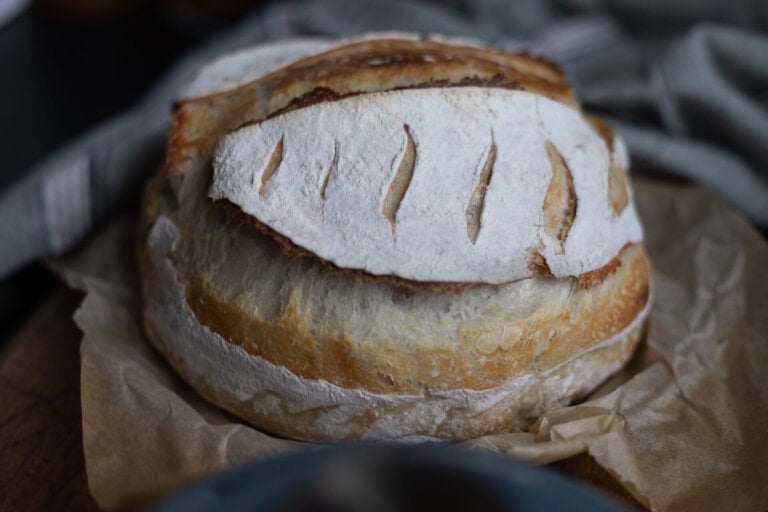
Pictured above is my sourdough artisan bread made simple recipe that’s perfect for beginners!
Fermentation & Rising Terms
- Fermentation: The process in which wild yeast and bacteria eat natural sugars in the flour and create gas (CO₂). This is what makes sourdough dough rise and develop flavor.
- Bulk Fermentation (Bulk Rise): The first rise that happens after mixing. Bulk fermentation includes stretch and folds, and is where most fermentation and gluten development takes place.
- Final Proof (Second Rise): The rise that happens after shaping. This can happen at room temp or in the fridge overnight.
- Room Temperature Proof: Proofing the shaped dough on the counter. This goes faster and tends to create a milder sour flavor.
- Cold Proof: Proofing the shaped dough in the fridge, typically 8–24 hours. Cold proofing deepens flavor and makes scoring easier.
- Rise Percentage: A method of measuring bulk fermentation based on how much the dough grows (ex: “stop bulk at 30–50% rise”). This can be more reliable than time alone.
- Aliquot Jar: A small jar used to hold a tiny piece of dough during bulk fermentation so you can easily track rise percentage (a very popular technique for consistent results).
- Peak: The highest point of a rising starter (right before it begins to fall). Adding starter to a recipe at peak gives the strongest rise to the dough.
- Under-Fermented: Dough that hasn’t fermented enough during bulk fermentation. Signs include a dense loaf, tight crumb, less flavor, and a weak rise.
- Over-Fermented: Dough that fermented too long during bulk fermentation. The gluten weakens, the dough can turn loose or sticky, and the loaf may spread flat with poor oven spring.
- Underproofed: Shaped dough that didn’t rise long enough during the final proof. Signs include blowouts, tearing, a tight crumb, and overly dramatic oven spring.
- Overproofed: Shaped dough that rose too long during the final proof. Loaves may deflate, spread out, and bake up flatter with little oven spring. (Don’t throw it out—make focaccia!)
- Retard / Retardation: Slowing fermentation by refrigerating the dough (usually during final proof). Retarding improves flavor and makes dough easier to score. You can also retard the dough to push baking back to a time that fits your schedule.
- Preferment: A portion of dough made ahead of time to boost fermentation and flavor. In sourdough, levain is the common preferment. Levain = preferment, same thing!
- Inoculation: The amount of starter/levain used in the dough. Higher inoculation = faster fermentation; lower inoculation = slower rise + more sour flavor. I formulate all of my recipes to be high inoculation.
- Ambient Temperature: The temperature of your kitchen. This affects timing more than almost anything else in sourdough.
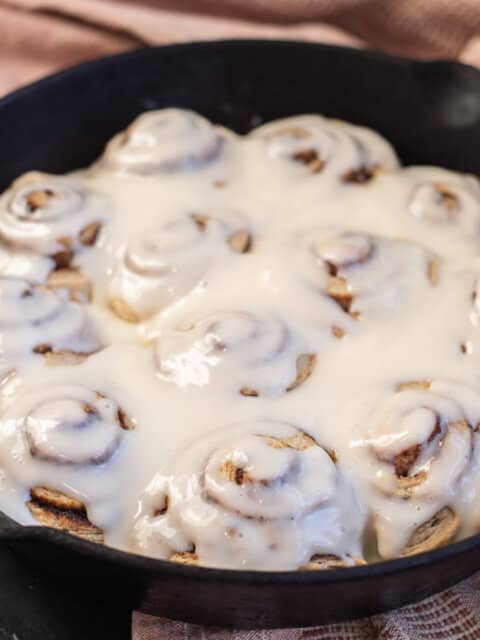
My viral 30-minute sourdough cinnamon rolls are a must!


Shaping & Tools Vocabulary
- Boule: A round loaf shape (classic artisan-style sourdough).
- Batard: An oval loaf shape, usually taller than a boule and very common for sourdough artisan sandwich bread.
- Pre-Shape: A gentle first shaping that organizes the dough before the final shaping, done after the bulk ferment.
- Final Shape: The last shaping step where you create surface tension and form the dough into its finished loaf shape before baking.
- Surface Tension: Tightening the outer “skin” of the dough during shaping so it holds its form and rises upward instead of spreading.
- Stitching: A shaping technique where you fold dough over itself in small sections to build structure and tension (common for high hydration dough).
- Bench Flour: Flour used on the countertop during shaping to prevent sticking (typically minimal for best tension).
- Bench Scraper: A tool used to lift, divide, and shape dough. It makes shaping so much easier, especially with sticky dough.
- Scoring Pattern: The intentional cuts made on top of the dough before baking to control expansion.
- Banneton: A proofing basket (often cane) used during final rise to support dough shape and create beautiful flour rings.
- Liner: The cloth insert used inside a banneton to prevent sticking (especially helpful for wetter dough).
- Seam Side Up / Down: Refers to whether the “folded seam” of dough is facing upward or downward in the basket. Many bakers proof seam-side up and flip it out onto parchment paper to score seam-side down.
- Rice Flour: A flour often used in bannetons because it doesn’t absorb water like wheat flour and helps prevent sticking.

Baking, Crust & Crumb Terms
- Oven Spring: The fast rise that happens in the first 10–15 minutes of baking as trapped gas expands and the dough puffs dramatically.
- Ear: The lifted “flap” of crust that forms along a score line when the loaf expands in the oven (highly desired by many bakers).
- Lame: A razor tool used to score dough quickly and cleanly.
- Score / Scoring: Cutting the dough before baking to direct expansion and prevent random splitting.
- Blowout: When a loaf splits in an unexpected spot (often because it was underproofed or not scored deeply enough).
- Dutch Oven Bake: Baking inside a preheated Dutch oven to trap steam, which improves oven spring and crust.
- Open bake (sometimes called “open oven bake”) means baking your sourdough loaf without a lid/covered vessel like a Dutch oven.
- Steam: Moisture in the oven that keeps the crust flexible early in baking so the loaf can expand fully.
- Crumb: The inside texture of bread. Crumb can be open (large holes) or tight (small holes). The loaf pictured above is closed crumb.
- Open Crumb: A holey interior that’s common in high-hydration artisan loaves. Beautiful, but not always ideal for sandwiches.
- Closed Crumb: A tighter crumb with small holes—perfect for sandwich bread and toast.
- Blistered Crust: Tiny bubbles on the crust, often from cold proofing + high heat.
- Gelatinization: When starches absorb water and set during baking—this is what gives bread structure once it cools.
- Internal Temperature: A reliable way to confirm bread is fully baked. Most lean sourdough loaves finish around 205–212°F inside.
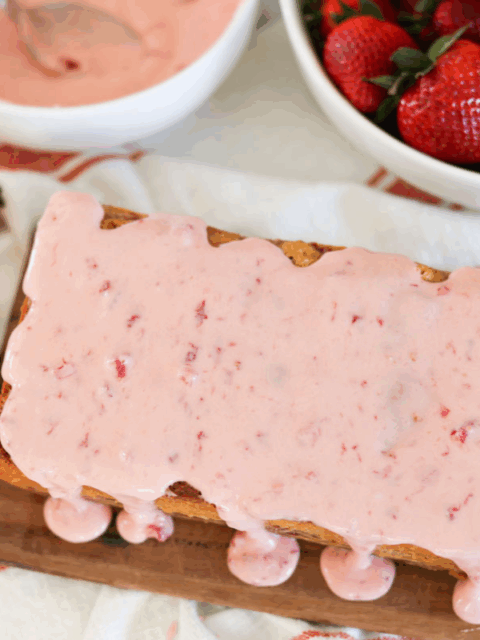
If you want to get creative, try my sourdough cannoli shells!




Common Sourdough Troubleshooting Terms
- Gummy / Wet Crumb: Bread that feels sticky or underbaked inside. Often caused by slicing too early, underbaking, underproofing, or overproofing.
- Tunneling: Large empty tunnels in the crumb. Common causes include underproofing or shaping that traps big air pockets.
- Dense Loaf: Heavy bread with very little rise. Usually caused by a weak starter or underproofing/under-fermentation.
- Flat Loaf: A loaf that spreads instead of rising upward. Often caused by overproofing/over-fermentation, weak shaping tension, or too-warm dough.
- Sticky Dough: Dough that feels impossible to handle. Often a sign of high hydration, insufficient gluten development, or over-fermentation. Try wet hands + a bench scraper, and add flour only a little at a time.
- Flying Crust: When the top crust separates from the crumb, creating a hollow space. Common causes include underproofing or too-hot baking conditions early on.
- Weak Starter: Starter that doesn’t rise predictably after feeding. Usually needs warm temperature, more frequent feedings, or a starter:water:flour ratio adjustment.
- Hooch: A gray/brown liquid layer on top of starter. It’s a sign the starter is hungry and needs feeding (not mold).
- Mold: Fuzzy growth or colored spots (pink/orange/green). If you see mold, the safest choice is to discard the starter, thoroughly wash/sanitize the jar, and start fresh. Some experienced home bakers will sometimes try to save a small amount of “clean” starter from underneath, but because mold can spread invisibly, I don’t recommend this for beginners.
Sourdough pullman bread is my go to sourdough sandwich loaf, we love these easy-to-slice square loaves!
Bookmark this post and come back when you need it!

About the Author
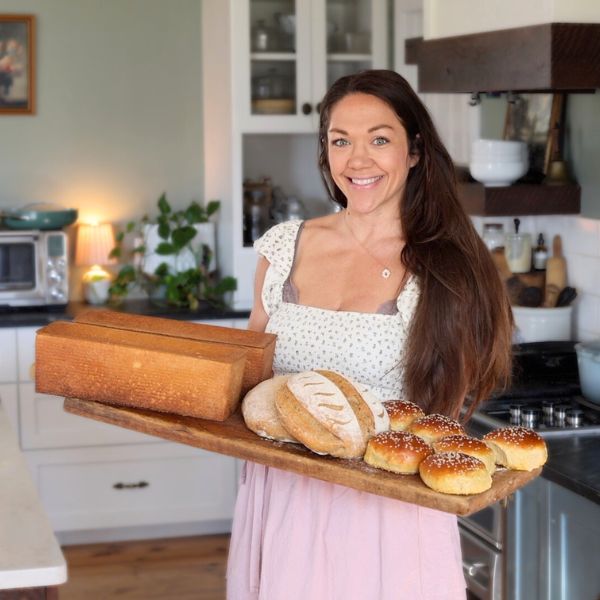
Welcome to Hopewell Heights, I’m Steph – seasoned sourdough baker, homesteader, homemaker, homeschooling mom of 5, and creator behind this Heritage American food blog. I hope you enjoy my family’s favorite, from-scratch recipes!