Transform stale, burnt, overproofed, or underproofed sourdough bread into something useful with this easy, flavorful sourdough breadcrumbs recipe — the perfect way to reduce waste while adding nutritious sourdough flavor to everyday meals.
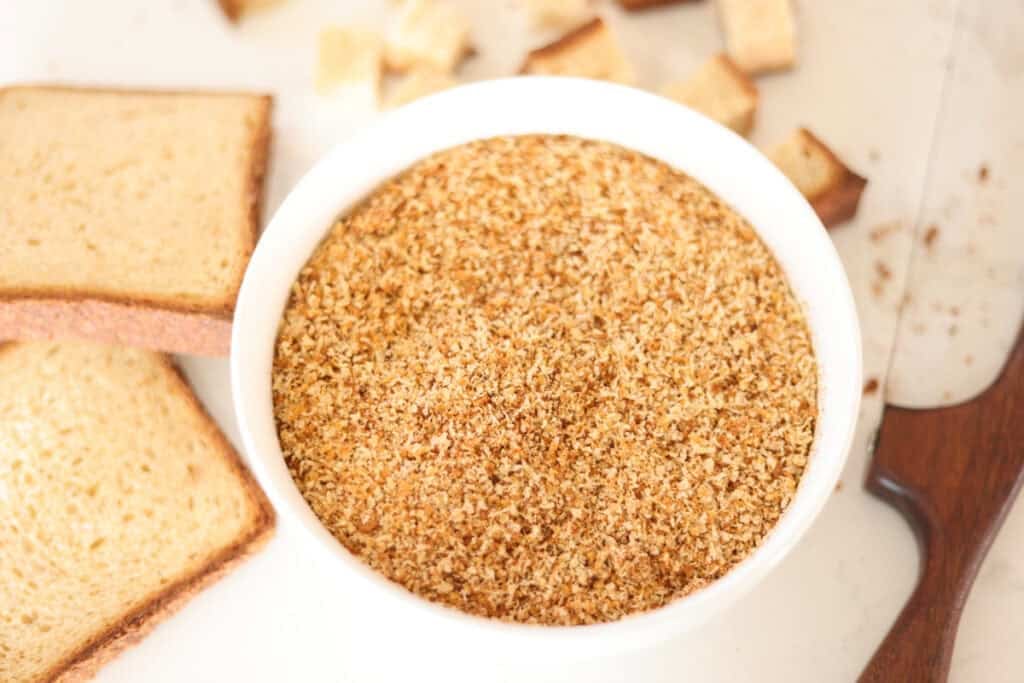
Quick Recipe Overview: Sourdough Breadcrumbs Recipe
⏱ Ready In: 1 hour
🍞 Yields: ~4 cups
🔥 Calories: ~110 per ¼ cup
🥖 Main Ingredients: dried sourdough bread, herbs (optional), salt (optional)
🌿 Dietary Info: vegetarian, dairy-free, zero-waste friendly
❤️ Why You’ll Love It: budget-friendly, reduces food waste, adds sourdough flavor
SUMMARIZE & SAVE THIS CONTENT ON
“There’s no such thing as ruined sourdough bread, just future breadcrumbs – this recipe is super easy, I use it regularly and have a steady stash of sourdoug breadcrumbs in my pantry!” – Steph
Why You’ll Love This Recipe
- Saves a failed loaf — even dense or overbaked sourdough can be repurposed into something useful and delicious.
- Turns sourdough mistakes into something delicious — transform baking disappointments into breadcrumbs, croutons, or hearty meals.
- Builds confidence in your sourdough journey — learning to recover from mistakes helps you bake with less stress and more success.
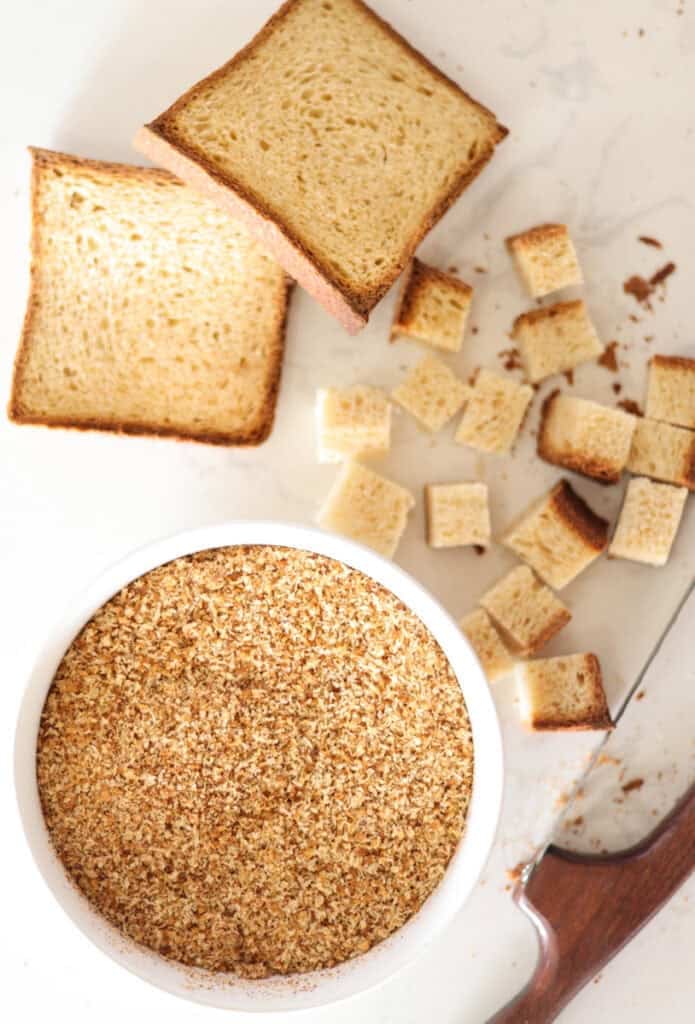
For some people, long fermented sourdough is the only way they can enjoy bread! Having long fermented sourdough bread crumbs on hand majorly expands your cooking options if regular bread is off limits for you. I use these breadcrumbs in my cast iron meatloaf, for breading any and all fried foods like this crispy coconut shrimp, and in any recipe you’d use breadcrumbs in!
This post may contain affiliate links. I only recommend products I use and love. If you purchase through my links, I may earn a small commission at no extra cost to you.
Key Ingredients
All you need is sourdough bread! Whether it’s stale, burnt, overproofed, or underproofed, you can use it to make breadcrumbs.

- Sourdough Bread – long-fermenting bread dough with sourdough starter breaks down gluten and phytic acid, making it easier to digest. (source) For many people, long-fermented sourdough is the only bread they can tolerate. Having this kind of breadcrumbs on hand greatly expands cooking options. You can use soft or hard sourdough bread, any kind works.
- Salt (optional) — Enhances flavor
- Dried herbs (optional) — Italian seasoning, parsley, or garlic powder add versatility
- Olive oil or butter (optional) — For richer toasted crumbs
Step-By-Step Instructions for making Sourdough Breadcrumbs
Preheat the oven to 300F.
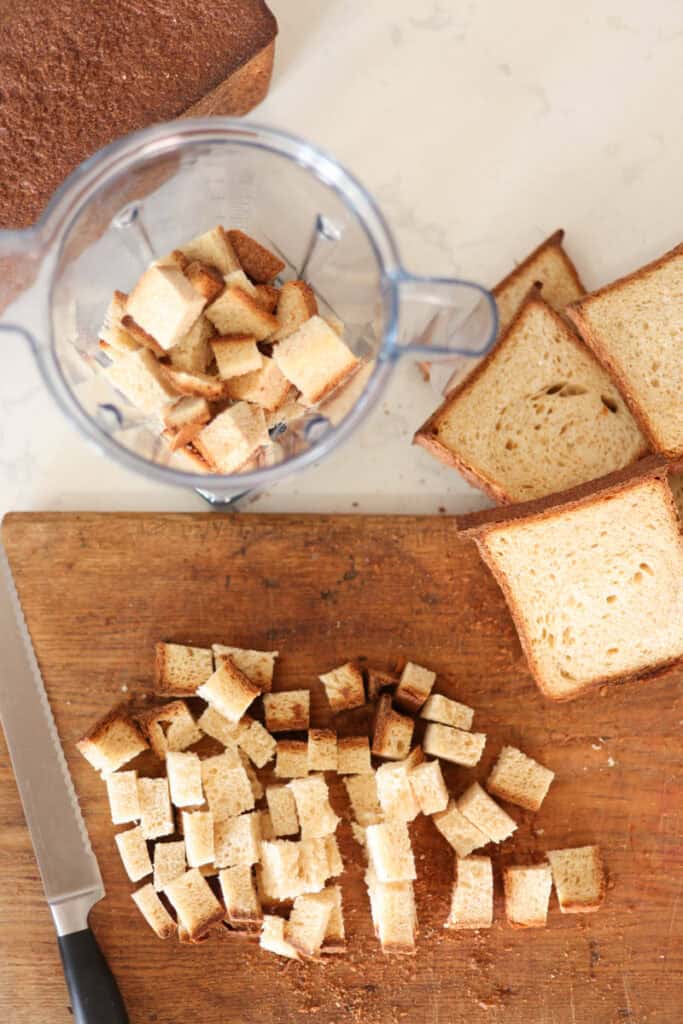
Step 1 – Cut Bread into Cubes: Stale bread works best; slice and cut it into half-inch cubes.
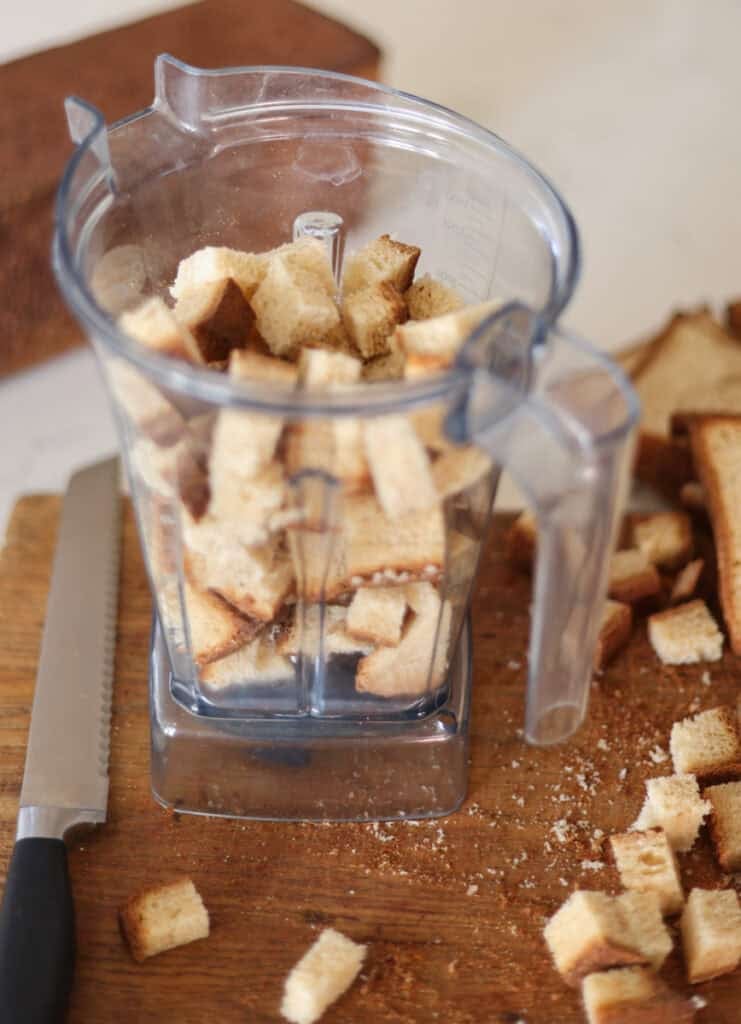
Step 2 – Fill Blender: For coarser crumbs, fill a blender halfway with bread cubes; for finer crumbs, fill it to the max line.
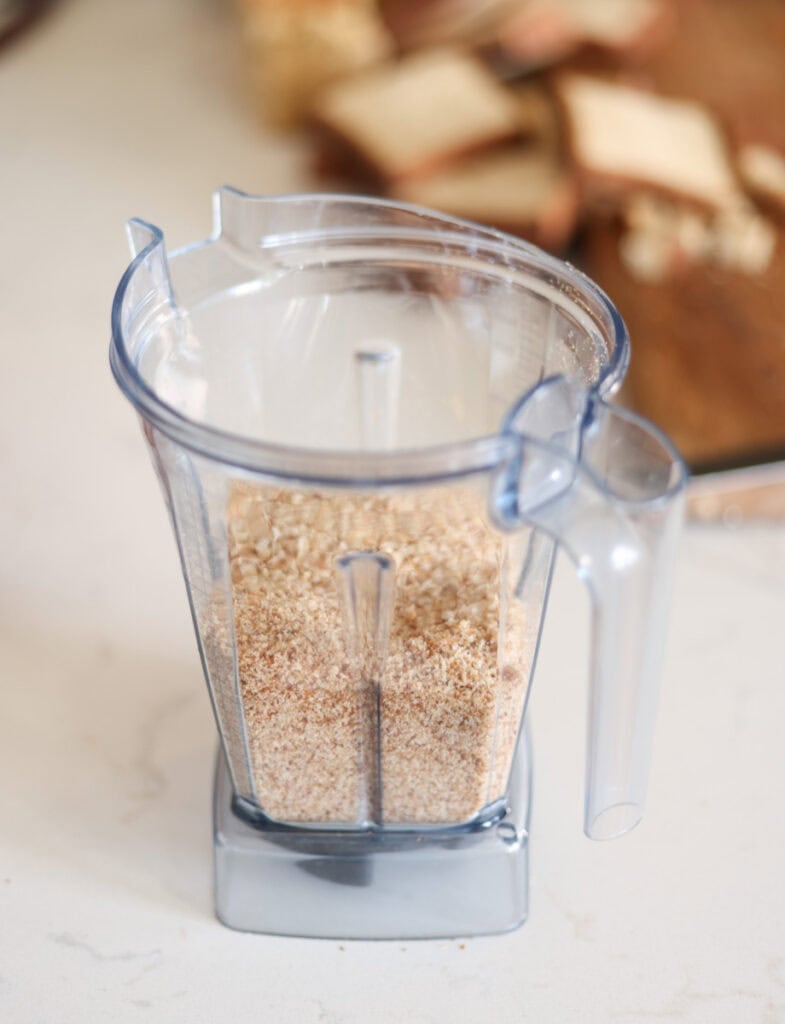
Step 3 – Blend into Breadcrumbs: For coarser breadcrumbs, blend for 20 – 30 seconds. For finer, blend for 60 seconds.

Step 4 – Bake: Place breadcrumbs on a baking sheet in a thin layer, bake in a preheated oven at 300F for 20 minutes, then use a spatula to stir the breadcrumbs in the pan, bake for another 8-10 minutes until the breadcrumbs are dry and crisp, but not toasted.
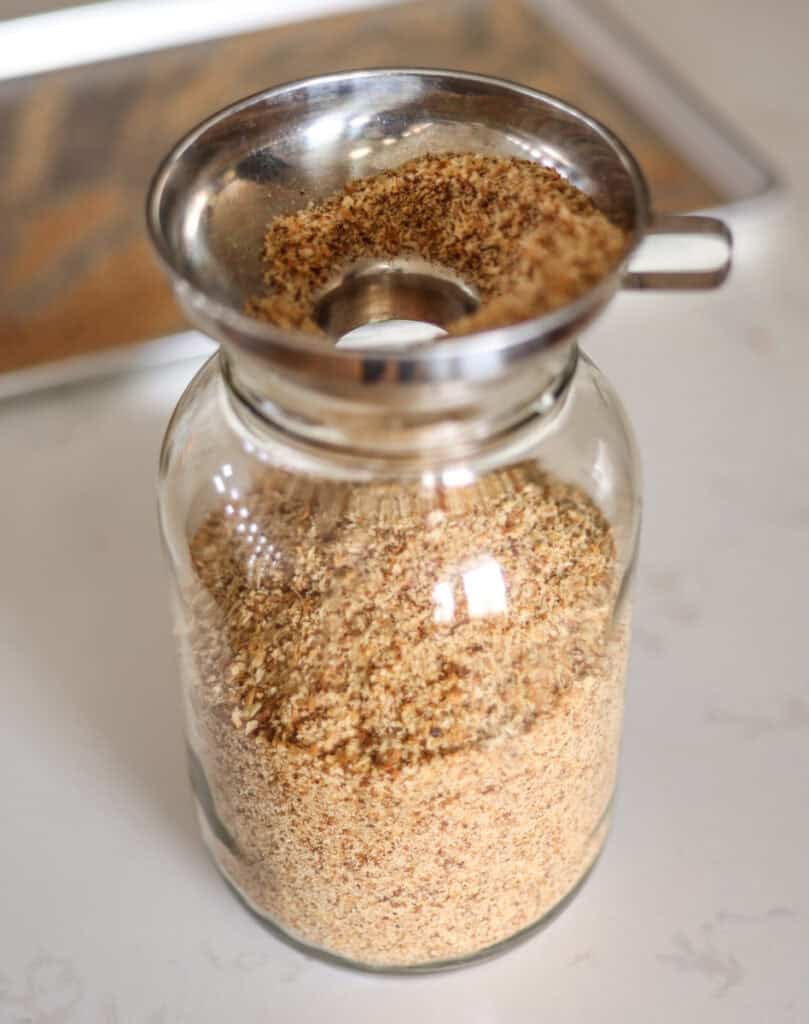
Step 5 – Cool and Prepare for Storage: Allow the breadcrumbs to cool completely in the pan for at least 30 minutes. Mix in any optional add-ins and transfer to an airtight container for storage.
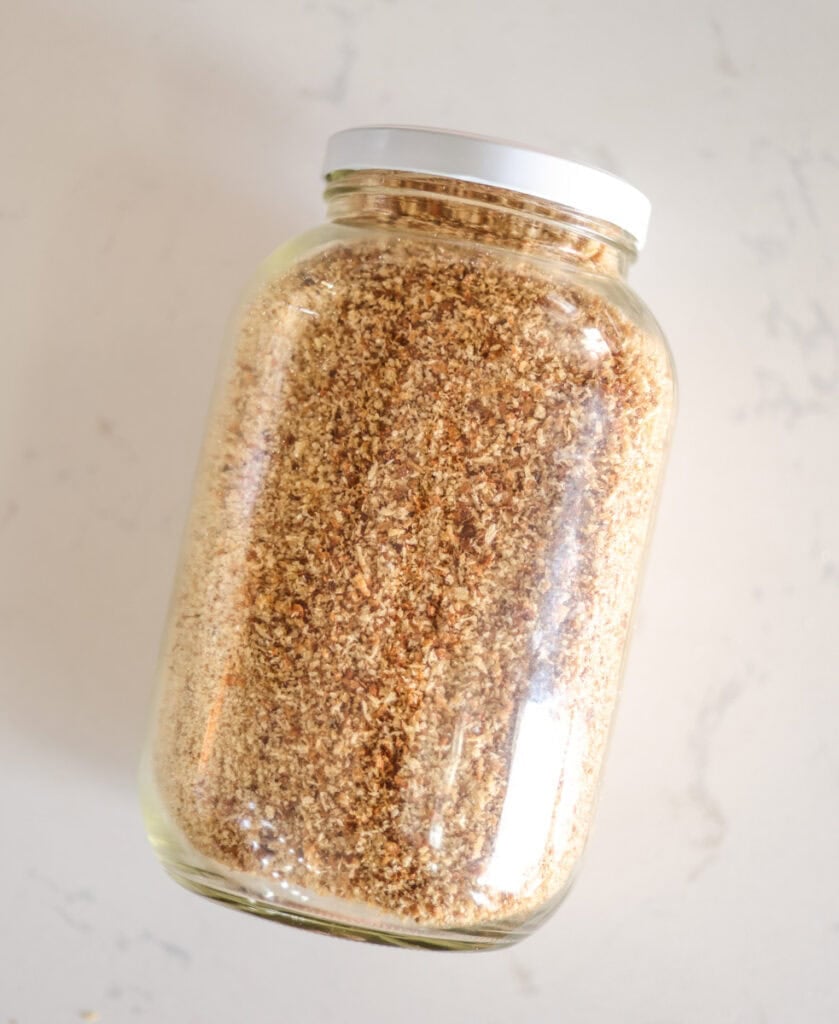
Step 6 – Store: Store in an airtight container for up to 4 weeks at room temperature. Use in any recipe that calls for breadcrumbs.
If you need help with sourdough vocabulary, check out my Complete Guide to Sourdough Terminology!
Sourdough Breadcrumbs Recipe FAQs
Yes, sourdough bread makes excellent breadcrumbs. Its naturally tangy flavor adds depth and richness, making them especially delicious for toppings, coatings, and casseroles.
Bread should be fully dry and hardened before processing. If it still feels soft, cube it and let it air dry overnight or bake at a low temperature until crisp to prevent gummy crumbs.
Toasting is optional but recommended. Toasting removes remaining moisture, improves storage life, and adds a deeper golden flavor that works well for toppings and coatings.
Place dried bread pieces in a sealed bag and crush them with a rolling pin or heavy pan. You can also grate very dry bread using a box grater for finer crumbs.
Fresh breadcrumbs are soft and moist, ideal for meatballs and stuffing, while dry breadcrumbs are crisp and shelf-stable, making them better for coatings and crunchy toppings.
Stored in an airtight container, sourdough breadcrumbs last 1 to 4 weeks at room temperature, up to one month in the refrigerator, or up to six months in the freezer.
Yes, sourdough breadcrumbs can be seasoned with salt, garlic powder, dried herbs, parmesan cheese, or lemon zest to match the dish you plan to use them in.
Sourdough breadcrumbs are perfect for coating chicken or vegetables, topping casseroles and mac and cheese, binding meatballs, adding crunch to salads, or making crispy stuffing.
Expert Tips for Making Sourdough Breadcrumbs
- Use fully dried bread for the best texture and storage life. Cube bread, cover it with a tea towel, and let it dry overnight before making breadcrumbs to ensure maximum dryness and extend shelf life.
- Pulse gradually to control crumb size and don’t overfill the blender. I use a Vitamix, which works great!
- Toast for a golden flavor when using as a topping. Add 20 minutes onto the bake time, stirring occasionally.
- Freeze extras to always have crumbs ready.
- Use a Box Grater if you don’t have a blender. Let large chunks of bread dry completely, then grate finely with a box grater.
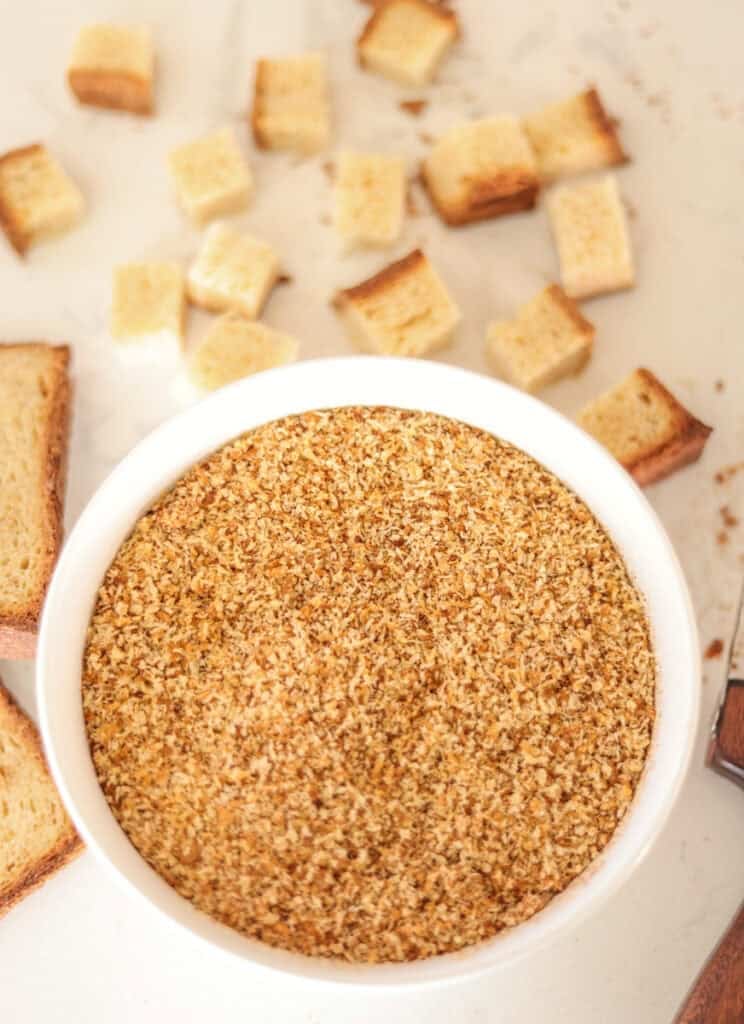
Storage
- Room temperature: 1 to 4 weeks in an airtight container, check for freshness.
- Refrigerator: up to 1 month.
- Freezer: up to 6 months
Store away from moisture to keep crumbs crisp

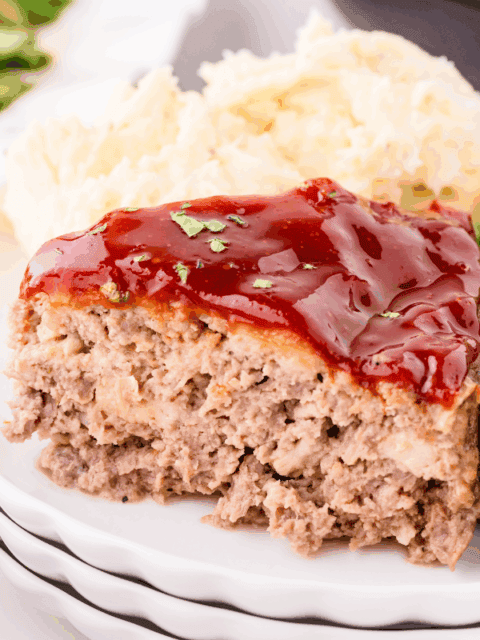
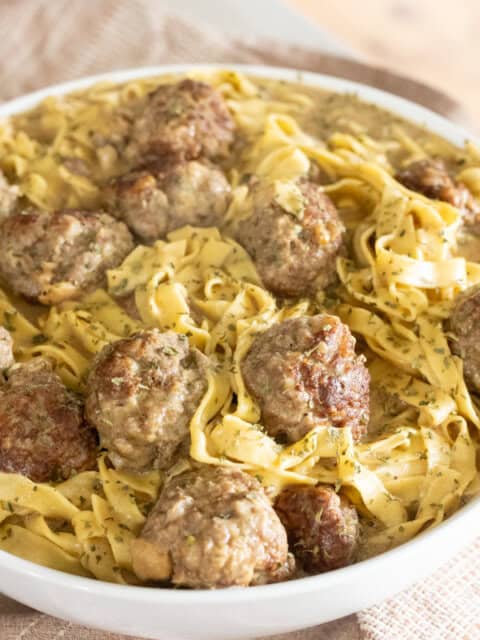

If you love this recipe, please leave a ⭐ 5-star ⭐ rating below! If you have questions or suggestions – drop a comment!

Sourdough Breadcrumbs Recipe
Ingredients
Equipment
Method
- Dry the bread — If the bread isn’t fully dry, cube it and leave it out overnight, or bake at 250°F for 15–20 minutes until dry.
- Cut into cubes — Slice and tear or chop the dried bread into small chunks or cubes for easier processing.
- Pulse into crumbs — Add bread pieces to a food processor and pulse until you reach your desired texture, from fine to coarse. For coarse, fill the blender halfway and pulse for 20-30 seconds. For fine, fill the blender to that max line and pulse for 60 seconds.
- Season (optional) — Toss crumbs with salt, garlic powder, or dried herbs if you want added flavor.
- Toast for extra flavor (optional, necessary if storing at room temperature) — Spread crumbs on a baking sheet and bake at 30°F for 20 minutes, then stir with spatula and bake for another 8-10 minutes. Add more time if you want the breadcrumbs toasted.
- Cool completely — Let crumbs cool fully before storing to prevent moisture buildup and keep them crisp.
- Store — Place in an airtight container for storage at room temperature.
Nutrition
Notes
- One loaf of sourdough yields roughly 4–5 cups of breadcrumbs.
- Use fine crumbs for meatballs and breading; coarse crumbs for toppings.
- Toasted crumbs add superior crunch and flavor; don’t toast if using for breading.
- Add parmesan, herbs, or lemon zest for seasoned variations.
- Great for coating chicken, topping casseroles, or binding meat mixtures.
Tried this recipe?
Let us know how it was!About the Author

Welcome to Hopewell Heights, I’m Steph – seasoned sourdough baker, homesteader, homemaker, homeschooling mom of 5, and creator behind this Heritage American food blog. I hope you enjoy my family’s favorite, from-scratch recipes!
There’s no such thing as ruined sourdough bread, just future breadcrumbs – this recipe is super easy, I use it regularly and have a steady stash of sourdoug breadcrumbs in my pantry!