Fermented carrots are an easy, beginner-friendly way to add naturally probiotic vegetables to your meals. Using a simple salt brine, this method turns fresh carrots into crisp, tangy lacto fermented carrots that are perfect for snacking, salads, and gut-friendly side dishes.

Quick Recipe Overview: Fermented Carrots
🕒 Ready In: ~5–10 days (15–20 minutes prep + fermentation)
👪 Serves: 1 quart
🥣 Main Ingredients: Fresh carrots, salt, water (optional garlic, dill, bay leaf, ginger, peppercorns)
📖 Dietary Info: Vegan, vegetarian, dairy-free, gluten-free, naturally probiotic
⭐ Why You’ll Love It: These fermented carrots are crisp, tangy, and beginner-friendly, made with a simple 2% brine and just a few ingredients for an easy, flavorful way to preserve carrots.
SUMMARIZE & SAVE THIS CONTENT ON
I buy fresh carrots in bulk and even though we eat them fresh often, I have more than I know what to do with. Fermenting carrots is the quickest and easiest way to preserve them while making them healthier too! – Steph
Why You’ll Love This Recipe
- Simple Ingredients: Made with just carrots, salt, and water—no starter cultures or special tools needed.
- Beginner-Friendly: A forgiving ferment with straightforward steps, perfect if you’re new to fermenting vegetables.
- Easy to Customize: Add garlic, dill, ginger, or spices to create different flavor variations.
- Easy Way to Preserve: Fermentation is a simple, traditional way to preserve fresh carrots while enhancing flavor.
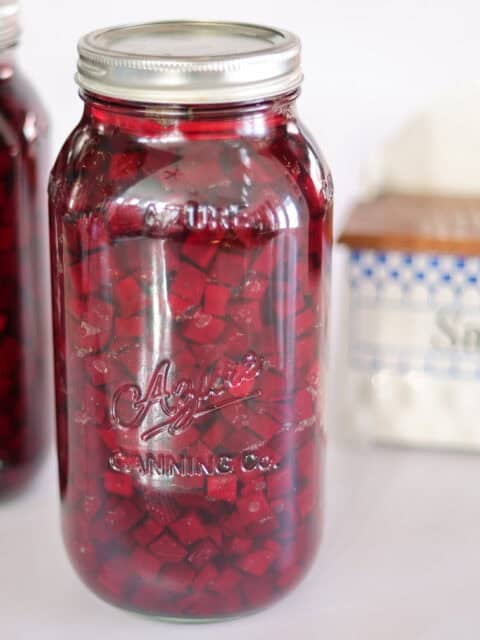
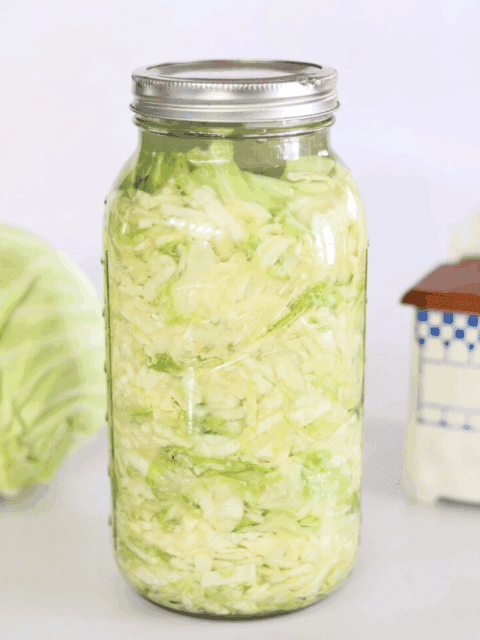
Fermented carrots are a great first step if you’re learning how to ferment vegetables at home. If you’ve already made homemade fermented sauerkraut or tried fermented beets using salt brine, you’ll notice the process is very similar—just a few ingredients, a salt brine, and a little time. Fermented carrots stay crisp, slightly tangy, and are an easy way to build a rotation of gut-friendly fermented vegetables.

This post may contain affiliate links. I only recommend products I use and love. If you purchase through my links, I may earn a small commission at no extra cost to you.
Key Ingredients
Precise measurements and instructions can be found in the recipe card at the bottom of the page.

- Carrots: Use organic, fresh, firm carrots for the best crunch; peel if desired and cut into sticks or coins for even fermentation.
- Salt: Non-iodized sea salt or kosher salt to support proper fermentation and prevent spoilage. I use Redmond Real Salt in all of my fermenting because it’s an unrefined mineral salt with no anti-caking agents or additives.
- Water: Use filtered, chlorine-free water to encourage beneficial bacteria and a successful ferment.
What Does “Lacto-Fermented” Mean?
- Natural Fermentation Process: Lacto-fermentation is a method where beneficial bacteria naturally present on vegetables convert sugars into lactic acid.
- No Dairy Involved: The term “lacto” refers to lactic acid, not milk—lacto-fermented foods are completely dairy-free.
- Preserves & Protects: Lactic acid lowers the pH, helping preserve vegetables while preventing harmful bacteria from growing.
- Rich in Probiotics: This process creates live beneficial bacteria that support gut health, digestion, and nutrient absorption (source).
Step-By-Step Instructions

Step 1 – Prep carrots: Wash (and peel if desired). Cut into sticks or coin-sized to fit your jar.

Step 2 – Pack jar: Tightly pack carrots into a clean quart jar, leaving 1–2 inches of headspace. Add optional flavorings (garlic, dill, peppercorns, ginger).

Step 3 – Make 2% brine: Dissolve 2 teaspoons non-iodized salt in 2 cups warm water (or 20g salt per 1 liter water).

Step 4 – Pour & submerge: Pour brine over carrots until fully covered.

Step 5 – Add a fermentation weight to keep everything under the brine.

Step 6 – Ferment: Cover with an airlock or a loose lid and ferment at room temperature (65–75°F) for 5–10 days, burping daily if using a tight lid.
Fermented Carrots FAQs
Yes, fermented carrots are very beginner-friendly. They use a simple 2% salt brine, require minimal ingredients, and have a forgiving fermentation window.
Fermented carrots typically ferment for 5–10 days at room temperature (65–75°F). Start tasting around day 5 and refrigerate once they reach your preferred tanginess.
Fermented carrots are best made with a 2% brine, which equals 20 grams of salt per 1 liter of water, or about 2 teaspoons salt per 2 cups water.
Yes, fermented carrots must stay fully submerged under the brine to prevent mold and ensure safe fermentation. A fermentation weight makes this much easier.
Yes, fermented carrots pair well with garlic, dill, ginger, bay leaf, or peppercorns. Add spices before fermenting so the flavors infuse evenly.
Expert Tips for Fermenting Carrots
- 🧂 Use a True 2% Brine: Stick to 20 g salt per 1 liter water (1 teaspoon salt per 1 cup water) for safe fermentation and crisp carrots.
- 🔪 Cut for Crunch: Carrot sticks stay crunchier than coins; thinner cuts ferment faster but soften sooner.
- 🌊 Submerge Completely: Keep carrots fully under the brine at all times to prevent mold and surface yeast.
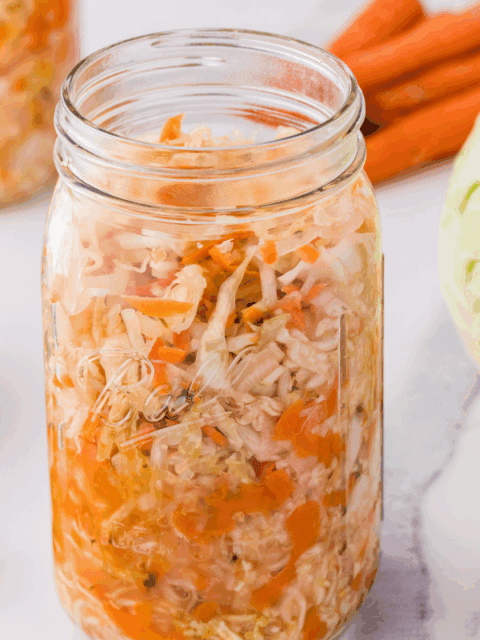
- ⚖️ Weights Help a Lot: A fermentation weight isn’t required, but it greatly reduces floating and spoilage. I made sauerkraut the same day I took these photos so I used a cabbage leaf to hold down carrot pieces before adding a weight, this is optional.
- 🌿 Flavor Lightly: Garlic, dill, ginger, or peppercorns work well—start small, as flavors intensify during fermentation.
- 👀 Watch the Signs: Bubbles and cloudy brine are normal; fuzzy mold or foul smells are not.
- ❄️ Refrigerate on Time: Once tangy (usually 5–10 days), refrigerate to slow fermentation and preserve crunch.

Storage
When to Refrigerate: After fermenting for 5–10 days (or once tangy to your liking), transfer to the refrigerator to slow fermentation.
Keep Submerged: Always keep carrots fully covered by brine to prevent spoilage.
Shelf Life: Properly stored in the fridge, fermented carrots will keep well for several months.
Serving Tip: Use clean utensils when serving to avoid introducing unwanted bacteria.
If you love this recipe, please leave a ⭐ 5-star ⭐ rating below! If you have questions or suggestions – drop a comment!

Fermented Carrots
Ingredients
Equipment
Method
- Prep carrots: Wash (and peel if desired). Cut into sticks or coins that fit your jar.
- Pack jar: Tightly pack carrots into a clean quart jar, leaving 1–2 inches of headspace. Add optional add-ins.
- Make brine: Dissolve 2 teaspoons salt in 2 cups warm water (2% brine).
- Pour & submerge: Pour brine over carrots until fully covered. Add a weight to keep everything submerged.
- Ferment: Cover loosely and ferment at room temperature (65–75°F) for 5–10 days, burping daily if needed.
- Store: When tangy to your liking, refrigerate with carrots fully submerged.
Nutrition
Notes
- Salt Ratio: Use a 2% brine (20 g salt per 1 liter water). For this recipe, that equals 2 tsp salt per 2 cups water.
- Cut Matters: Carrot sticks stay crunchier than coins; thinner cuts ferment faster.
- Submersion Is Key: Keep carrots fully submerged under brine at all times to prevent mold.
- Fermentation Time: Ferment at room temperature (65–75°F) for 5–10 days. Start tasting after day 5.
- What’s Normal: Bubbles, cloudy brine, and a tangy smell are signs of healthy fermentation. Mold is not.
- Storage: Once fermented to your liking, refrigerate with carrots submerged in brine. Keeps for several months.
Tried this recipe?
Let us know how it was!About the Author

Welcome to Hopewell Heights, I’m Steph – seasoned sourdough baker, homesteader, homemaker, homeschooling mom of 5, and creator behind this Heritage American food blog. I hope you enjoy my family’s favorite, from-scratch recipes!
Looks tast, healty and easy. I will try It.
I buy fresh carrots in bulk and even though we eat them fresh often, I have more than I know what to do with. Fermenting carrots is the quickest and easiest way to preserve them while making them healthier too!